
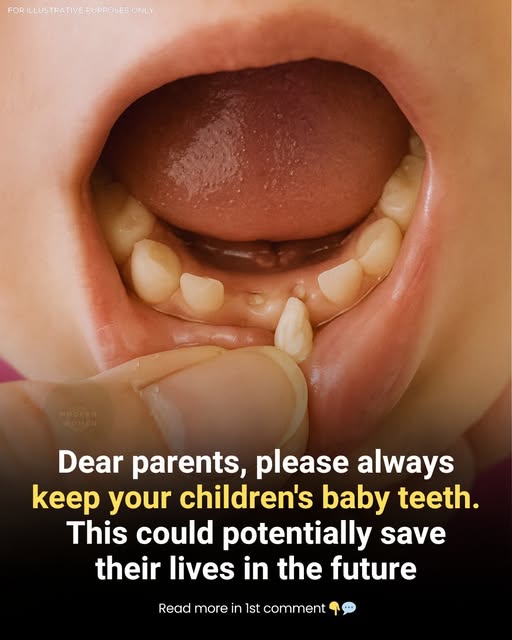
Tiny Teeth, Big Possibilities: Why Baby Teeth Are Drawing New Interest in Stem Cell Research
A Childhood Tradition Meets a Scientific Opportunity
When a child loses a baby tooth, many families treat it as a small milestone, often tied to the familiar Tooth Fairy tradition.
For researchers, however, a naturally shed tooth can represent something far more significant than a keepsake.
Scientists point to baby teeth as a potential source of powerful stem cells that may one day support healing, regeneration, and a wide range of medical applications.
This growing interest has also fueled attention around baby tooth banking, a service offered by private companies that store teeth for possible future use.
Understanding what is inside a baby tooth and what current research suggests can help explain why this topic continues to gain momentum.
What’s Inside a Baby Tooth
Baby teeth, also known as deciduous teeth, contain dental pulp, a soft tissue located inside the tooth.
Dental pulp is rich in mesenchymal stem cells, often referred to as MSCs.
These stem cells are described as multipotent, meaning they have the ability to transform into several different cell types.
Examples of cell types they may become include bone, cartilage, nerve tissue, fat, and muscle.
This versatility is one of the reasons dental stem cells are considered an area of significant scientific promise.
Why Dental Stem Cells Stand Out
Dental stem cells are described as ethically non-controversial because they are not embryonic stem cells.
They can also be collected without invasive procedures when a child’s tooth falls out naturally or is extracted.
Because baby teeth are part of normal development, the collection process can fit within events that already occur during childhood.
Researchers have focused on how the characteristics of these cells might support future medical treatments.
At the same time, the practical ease of collection has contributed to the growing interest in preservation and storage.
The Research Focus and the Current Reality
The potential uses of stem cells from baby teeth are widely described as promising, but most applications remain in the research stage.
Studies have explored multiple avenues for how these cells might be used in future therapies.
While the field has generated strong interest, it is also emphasized that most of these ideas are not yet FDA-approved treatments.
The distinction between research potential and routine clinical use is central to how the topic is discussed.
Much of the attention reflects where science may be headed rather than what is currently standard medical practice.
Regenerative Medicine Possibilities Under Study
One of the most frequently discussed research areas involving dental stem cells is regenerative medicine.
Research has considered whether these cells could contribute to repairing damaged heart tissue after heart attacks.
Other investigations focus on regenerating bone in craniofacial injuries.
Another long-term research direction involves the concept of growing bioengineered teeth.
These studies reflect a broader scientific effort to use stem cells to restore or rebuild tissues that are damaged or lost.
Interest in Neurological Conditions
Research has also explored the possibility that dental stem cells might help promote nerve regeneration.
Early laboratory studies have suggested potential relevance to conditions such as Parkinson’s disease, Alzheimer’s disease, and spinal cord injuries.
The focus in these areas centers on whether the cells could support healing pathways connected to nerve tissue.
These findings are still presented as early-stage research rather than established medical solutions.
Even so, the potential link between dental stem cells and neurological recovery remains one of the most discussed aspects of the field.
Type 1 Diabetes Research Directions
Another area of research highlighted in discussions of dental stem cells involves Type 1 diabetes.
Animal studies have indicated that dental stem cells can be coaxed into becoming insulin-producing cells.
This line of study reflects an interest in whether stem cells could one day support treatments aimed at restoring insulin production.
As with other applications, this work remains experimental and has not been presented as routine clinical care.
The significance lies in the possibility of new approaches rather than guaranteed therapies.
Exploration in Autoimmune Disorders
Mesenchymal stem cells are also described as having natural anti-inflammatory properties.
Because inflammation is a key feature of many autoimmune conditions, research has examined their potential relevance in that area.
Examples of autoimmune disorders mentioned in this context include lupus, multiple sclerosis, and Crohn’s disease.
The focus of these investigations is tied to how MSCs might influence immune responses and inflammation pathways.
These research directions are often described as promising while still being under active study.
A Clear Note on Treatment Status
Despite the broad range of potential applications described in research, a key point is repeatedly emphasized.
Most of these uses are not yet FDA-approved treatments.
They are described as promising avenues that scientists continue to explore through research and experimentation.
This distinction is important for understanding what dental stem cells may offer now versus what they might offer in the future.
Current interest is largely driven by potential rather than confirmed, widely available medical therapies.
What Baby Tooth Banking Means
Baby tooth banking is a private service that collects, processes, and cryogenically freezes a child’s tooth for possible future use.
The idea is that the dental pulp inside the tooth may provide a source of stem cells that could be useful later in life.
Companies offering this service position it as a form of long-term preservation.
In practical terms, the process involves capturing a suitable tooth, preparing it for storage, and maintaining it in frozen conditions.
The decision to bank a tooth is often framed as a personal choice tied to both cost and expectations about future medical progress.
Reasons Some Families Consider Banking
Supporters of baby tooth banking often point to the non-invasive nature of collection when a tooth falls out naturally.
Another frequently cited point is that younger stem cells are described as having higher potency and stronger proliferation capacity.
Some also view storage as a type of “biological insurance,” based on the belief that future therapies could expand.
The appeal comes from the combination of ease of collection and the long-term scientific promise associated with stem cell research.
For families interested in emerging science, the concept can feel like turning a routine childhood event into something potentially valuable.
Costs and Practical Drawbacks
Baby tooth banking is associated with significant expense.
Costs are described as ranging from $1,000 to $2,000 for an initial fee, with ongoing storage fees of roughly $100 to $200 per year.
Another important limitation is that there are no guaranteed therapies yet, since most applications remain experimental.
Additionally, the number of teeth considered viable for banking is typically limited, often described as only one or two.
These factors shape the decision-making process for families evaluating whether the service is worthwhile.
Which Teeth Are Considered Best Candidates
Not every baby tooth is considered suitable for stem cell preservation.
Best candidates are described as teeth that are naturally loose but still have intact roots.
Teeth that are decayed or infected are not considered ideal because the dental pulp may be compromised.
The goal is to preserve healthy pulp tissue, since that is where the mesenchymal stem cells are located.
This means families considering banking often need to pay close attention to the condition of the tooth before collection.
Why Timing Plays a Major Role
Timing is described as critical for successful tooth banking.
Teeth must be sent to the bank within 48 hours of falling out.
This requirement reflects the need to preserve the living tissue inside the tooth before it degrades.
The limited window means families need a plan in place before the tooth is lost.
Without preparation, it can be difficult to meet processing and shipment timelines.
Additional Points Parents Are Told to Consider
One important consideration is that not all teeth qualify, since only healthy teeth with pulp intact are usable.
Another point emphasized is that public banking is not available for dental stem cells.
Unlike cord blood, dental stem cells are described as being stored only through private services.
Parents are also advised to speak with a dentist, who can help collect and preserve the tooth appropriately.
These details underscore that banking is not simply about saving a tooth but about following specific handling steps.
The Bottom Line on Baby Teeth and Stem Cell Promise
Baby teeth are increasingly described as more than childhood keepsakes because they contain dental pulp rich in mesenchymal stem cells.
The scientific promise attached to these cells includes possible future roles in regenerative medicine, neurological research, diabetes studies, and investigations into autoimmune disorders.
At the same time, the field is still largely positioned as research-focused, with most potential applications not yet approved as standard treatments.
Banking a child’s baby teeth is presented as a personal decision shaped by cost, practicality, and expectations about future medical advances.
For families who want to explore the option, early planning and consultation with a pediatric dentist are emphasized as important steps before those small teeth are lost.