
The Hidden History of America’s Trail Trees and Indigenous Navigation
Navigation Before the Digital Age
Modern travel is almost inseparable from digital navigation. Smartphones, satellite systems, and real-time mapping applications now guide millions of people through cities, highways, and rural backroads with effortless precision.
Global Positioning System technology has reshaped how people move through the world. Many no longer memorize routes or consult printed maps, relying instead on automated turn-by-turn instructions.
Yet for thousands of years, human beings traveled vast distances without electronics, road signs, or printed directions. They crossed deserts, forests, rivers, plains, and mountains using knowledge deeply rooted in the natural world.
Long before satellites orbited Earth, Indigenous cultures, traders, hunters, and explorers navigated successfully through observation, memory, and environmental awareness.
They studied the movement of the sun and stars, the flow of rivers, seasonal plant changes, and the contours of landforms. Travel depended on experience, storytelling, and shared community knowledge.
The Mystery of “Trail Trees”
Among the most intriguing traditional navigation methods in North America are what many people call “trail trees,” sometimes referred to as “Indian marker trees.”
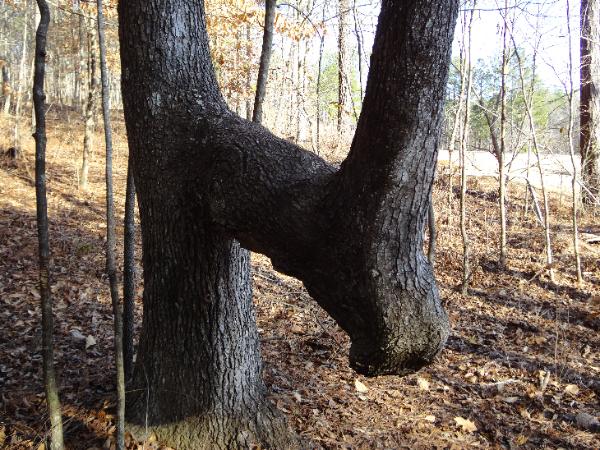
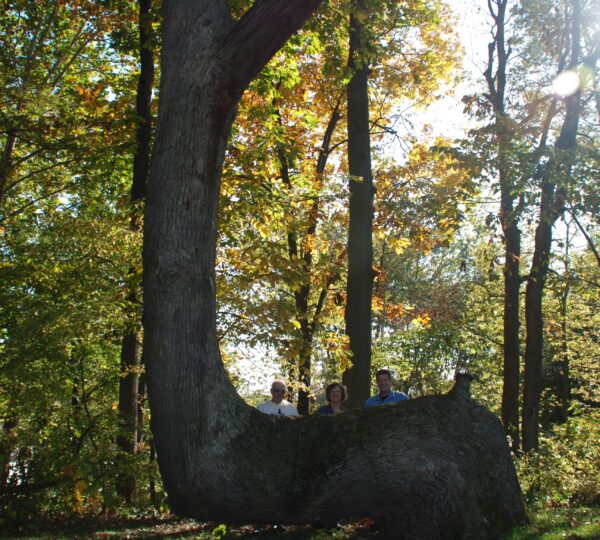
In various parts of the United States, unusual trees can still be found bending sharply near their base before curving upward toward the sky.
At first glance, these shapes might appear to be the result of storm damage, lightning strikes, heavy snow, or competition for sunlight.
In some cases, natural causes are indeed responsible. However, historians, researchers, and preservation groups have documented examples that appear to have been intentionally shaped generations ago.
These trees are believed by some to have functioned as living directional markers created by Native American communities.
Indigenous Systems of Land Navigation
Before European settlement dramatically transformed North America’s landscape, Native American tribes developed highly refined navigation systems.
These systems were built on careful observation of ecosystems and long-term familiarity with regional terrain.
Knowledge of water sources, hunting grounds, safe crossings, and seasonal gathering areas was passed down through oral tradition.
Stories carried practical information about landmarks and pathways, ensuring continuity from one generation to the next.
In heavily forested areas where sightlines were limited, subtle environmental indicators could make the difference between safe passage and disorientation.
How Trees Were Shaped
In certain regions, young saplings were deliberately bent while still flexible.
The tree would be trained into a horizontal position near ground level and secured so it continued growing in that direction before eventually turning upward.
As the tree matured, it retained this distinctive shape.
Unlike wooden signposts that could rot or carved symbols that might fade, a living tree could survive for decades or even centuries.
These modified trees are believed by some researchers to have pointed toward freshwater springs, river crossings, mountain passes, or established travel routes.
In landscapes where natural features could appear repetitive, such a tree may have served as a reliable guidepost.
Distinguishing Nature From Human Influence
Not every bent tree is evidence of human shaping. Natural forces often produce unusual growth forms.
Strong prevailing winds, unstable soil, snow pressure, insect damage, or early trauma can cause trunks to curve or lean.
Because of this, researchers stress the importance of caution when identifying potential trail trees.
Careful evaluation must include historical context, geographic location, nearby terrain features, and patterns observed in surrounding areas.
No single characteristic alone confirms intentional shaping.
Commonly Observed Features
Some trees believed to be markers share recurring traits.
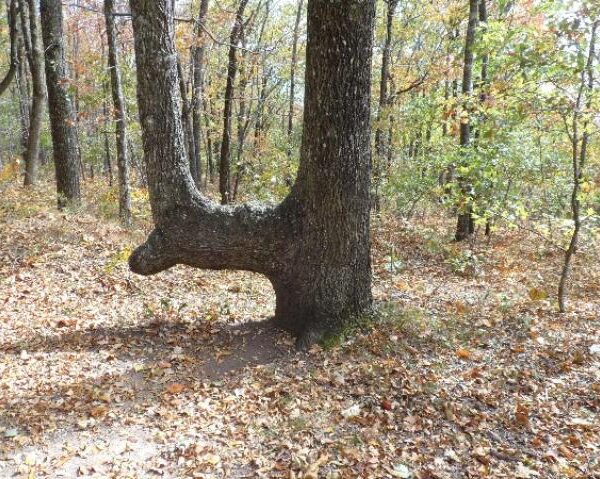
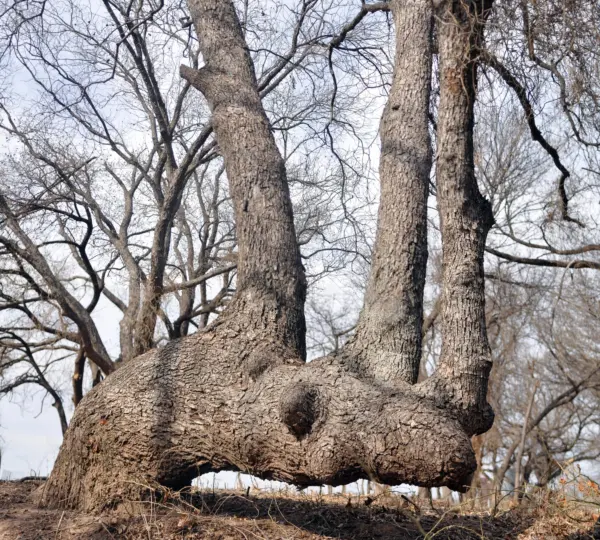
A pronounced horizontal bend a few feet above ground level is often cited as one such feature.
After extending outward, the trunk gradually curves upward and resumes vertical growth.
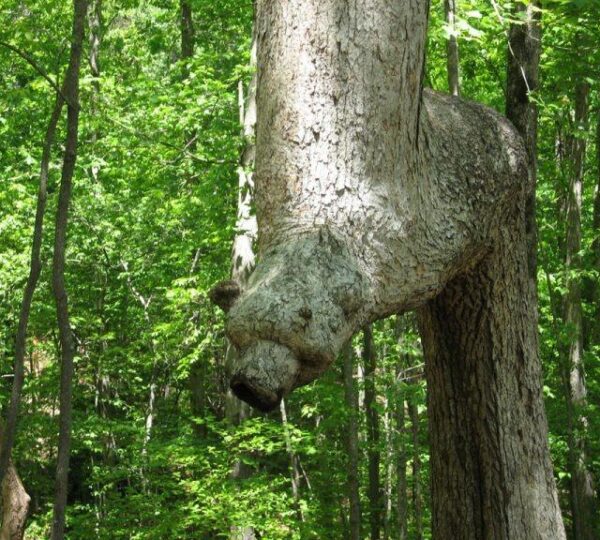
Occasionally, a small protrusion or knot appears near the bend, sometimes described as a “nose.”
Oral accounts suggest that pegs or small branches may have been inserted to secure the sapling while it grew around the support.
In certain cases, scarring near the bend has been noted, potentially linked to bindings used during shaping.
However, similar scars can also result from insects, disease, or environmental stress, reinforcing the need for comprehensive analysis.
Estimating Age and Historical Context
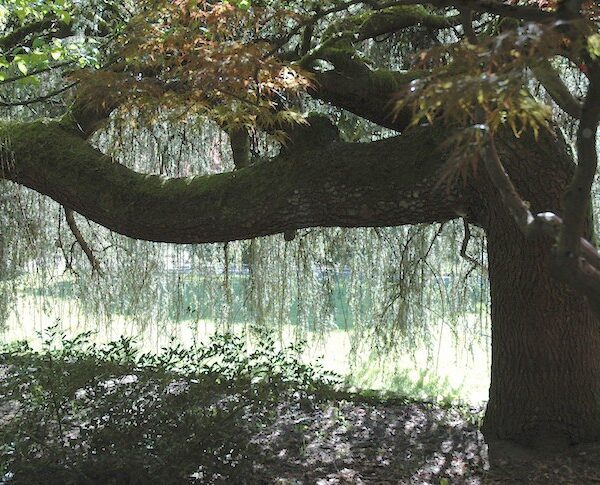
Many trees identified as possible trail markers are estimated to be between 150 and 200 years old.
Some may be even older, depending on species and growth conditions.
Age estimates are often based on trunk diameter and species-specific growth rates.
When fallen specimens are available, dendrochronology, the study of tree rings, can provide more precise dating.
Understanding age is crucial in determining whether a tree could plausibly connect to pre-settlement travel routes.
Cultural Meaning Beyond Direction
The potential significance of trail trees extends beyond navigation.
Shaping a sapling required patience and foresight.
The person bending the tree might never have personally relied on it for travel.
Instead, the tree would serve future generations.
This reflects a broader Indigenous worldview centered on stewardship, continuity, and long-term responsibility.
The act of shaping a tree for communal benefit demonstrates intentional planning measured not in years, but in lifetimes.
Transformation of the Landscape
As European settlers expanded westward, many Native American trails were adopted and eventually widened into wagon roads, highways, and rail corridors.
Some early American roadways may have followed pre-existing Indigenous pathways.
However, large-scale logging, agriculture, urban growth, and infrastructure development dramatically altered forests.
Countless trees were removed before their potential historical value was recognized.
Traditional ecological knowledge was also disrupted as communities were displaced and landscapes reshaped.
Modern Preservation Efforts
Today, possible trail trees face ongoing threats from development and land clearing.
Housing expansion, road construction, and commercial projects can eliminate unusual trees without documentation.
In many cases, property owners may not realize that a bent tree could hold cultural importance.
Preservation groups and volunteers now work to identify, photograph, and map potential examples.
Databases have been created to record geolocation data, images, and descriptive notes.
Even when definitive proof is not possible, systematic documentation helps researchers analyze patterns and protect surviving specimens.
The Importance of Balanced Interpretation
Interest in “Indian marker trees” has grown significantly in recent decades.
With that interest comes the need for careful scholarship.
Some historians and archaeologists caution against attributing every unusual tree to intentional shaping.
Responsible interpretation requires collaboration with Native American tribes and respect for oral traditions.
Local tribal history, geographic context, and documented travel corridors all play essential roles in evaluation.
Broad generalizations without evidence can undermine meaningful preservation efforts.
Living Reminders of Environmental Knowledge
Despite debate over individual specimens, there is wide agreement that Indigenous communities across North America used sophisticated environmental markers.
These included shaped trees, rock cairns, controlled burns, and other land-based signals.
Such systems enabled effective travel and land management across vast territories.
They formed part of an ecological knowledge base refined over thousands of years.
Encountering a bent tree in the woods today can be a powerful experience.
Its unusual form invites reflection about human relationships with the land.
Lessons for the Present and Future
Trail trees encourage modern observers to reconsider how navigation once depended on cooperation with nature rather than technology.
Indigenous navigation emphasized harmony, adaptation, and sustainability.
Rather than imposing rigid structures onto landscapes, communities worked within existing ecosystems.
This philosophy carries renewed relevance in an era of environmental challenges.
Deforestation, habitat loss, and climate pressures highlight the importance of sustainable land practices.
Protecting culturally significant trees aligns with broader goals of conservation and biodiversity preservation.
Honoring Indigenous Contributions
For many years, Native American contributions were underrepresented in mainstream historical narratives.
Recognizing trail trees as part of a broader system of Indigenous innovation helps address that imbalance.
It acknowledges that advanced knowledge systems existed long before modern mapping tools.
Each surviving tree becomes a living archive.
Its growth rings record seasons past, while its shape reflects human intention blended with natural development.
Its continued presence depends on contemporary choices about preservation and respect.
A Moment of Reflection in the Forest
When walking through wooded areas and encountering a sharply bent tree that rises again toward the sky, pause to observe carefully.
Consider its age, its surroundings, and its orientation.
It may represent more than wind or weather.
It may reflect a tradition rooted in environmental awareness and cultural continuity.
Technology has transformed navigation in extraordinary ways, offering instant directions and global connectivity.
Yet long before satellites guided travelers, people relied on memory, stars, rivers, and living landmarks.
That legacy remains quietly present in certain corners of the American landscape.
Preserving these trees means preserving stories of cooperation, resilience, and deep respect for the land.
In a fast-moving digital era, trail trees remind us that wisdom does not always come from advanced machinery.
Sometimes it grows slowly, ring by ring, shaped by careful hands and sustained by nature itself.
</final