
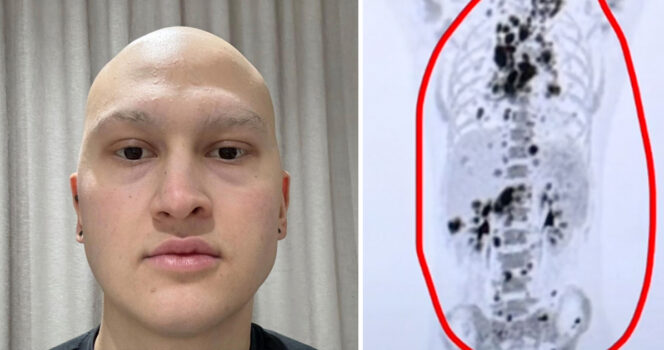
21-Year-Old Man Mistakes Cancer Symptoms for Chest Infection Before Stage 4 Diagnosis
Early Signs Overlooked Amid Daily Life
A 21-year-old Australian man initially believed he was dealing with a minor chest infection, unaware that his symptoms were linked to a far more serious condition. What seemed like routine health issues eventually led to a diagnosis of stage 4 Hodgkin’s lymphoma.
Looking back on his experience, Jay Shew reflected on how easily the early warning signs were dismissed. Like many young people, he did not immediately associate his symptoms with a serious illness, instead assuming they were temporary and manageable.
“Most guys, we don’t get checked out. We get a symptom; we just brush it off. That’s what happened to me in August 2023,” he said while sharing his story in a video.
At the time, there was little to suggest anything was wrong. He described himself as feeling normal and continuing with everyday activities without concern.
Unexpected Results From a Routine Test
The first indication that something might be wrong came from what he described as a routine blood test. Despite feeling healthy, the results showed elevated calcium levels, a finding that can sometimes point to underlying medical issues.
“I didn’t have any symptoms at the time, I was just normal, living every day,” he explained.
Initially, he did not understand the significance of the result. Only later did he learn that high calcium levels could be linked to disease activity within the body, including conditions affecting the bones.
“I didn’t know that,” he said, noting that he later realized the elevated levels meant his body was reacting to an underlying illness.
Noticeable Physical Changes Raise Concern
In the weeks that followed, his physical condition began to change in ways that were difficult for others to ignore. Standing at 6-foot-2, he experienced rapid weight loss, eventually dropping to around 154 pounds.
Those close to him began expressing concern about his appearance, noting that he looked unusually thin and pale. Despite these observations, he struggled to see the changes himself.
“I start to drop a lot of weight and I legit like go white. I was so pale. I didn’t notice. I didn’t realize,” he said.
Friends and family repeatedly commented on his appearance, describing him as “so skinny” and even saying he looked “like a ghost.”
When he looked in the mirror, however, he did not perceive the same level of change. “I looked in the mirror and I was like: ‘I’m fine? I don’t look skinny; I don’t look pale.’ I couldn’t see it,” he explained.
At one point, someone even asked whether he might be seriously ill, a suggestion that felt unrealistic to him at the time.
Symptoms Intensify Over Time
As time went on, the symptoms became increasingly difficult to ignore. What had once seemed mild or unrelated began to develop into more severe and persistent issues.
He began experiencing intense lower back pain that disrupted his sleep. “I’d wake up in the middle of the night or in the morning and it felt like my lower back was breaking,” he recalled. “It was that bad.”
Nighttime brought additional discomfort, with episodes of excessive sweating that left him confused about the cause. “So, I’d wake up in the middle of the night and I’d be sweating. One morning, I woke up and I thought I p**sed the bed – that’s how bad it was,” he said. “I looked at my shirt and I was like: ‘This is sweat?’”
During the day, his energy levels dropped significantly. Simple activities became exhausting, and he often found himself needing to rest frequently.
“I could not move. I’d wake up and a couple hours later I’d be back in bed having a nap,” he said.
Additional symptoms also began to appear, including dry skin, persistent itching, and discomfort in his chest. While each symptom might have seemed minor on its own, together they formed a pattern that indicated a more serious underlying issue.
“Keep in mind that since I got the blood test, up until now, I’m having every single cancer symptom. I just didn’t realize it,” he said.
Initial Misdiagnosis and Worsening Condition
As his symptoms progressed, the discomfort in his chest became more pronounced. Combined with changes in his voice and the presence of phlegm, he began to suspect a respiratory illness.
He initially believed he was dealing with bronchitis or a chest infection, a conclusion that seemed consistent with his symptoms at the time. He was treated with antibiotics, but the improvement was only temporary.
After completing treatment, his condition deteriorated once again. The symptoms returned with greater intensity, prompting further medical investigation.
“Got sick again” and the symptoms “came back worse this time,” he said, describing how the situation escalated despite initial treatment efforts.
With his health continuing to decline, doctors ordered a CT scan to gain a clearer understanding of what was happening.
Stage 4 Hodgkin’s Lymphoma Diagnosis
The scan revealed the underlying cause of his symptoms: stage 4 Hodgkin’s lymphoma. The diagnosis marked a turning point, providing clarity but also confirming the seriousness of his condition.
Hodgkin’s lymphoma is a type of cancer that affects the lymphatic system, which plays a key role in the body’s immune response. The disease develops when certain white blood cells grow uncontrollably, potentially spreading beyond the lymphatic system if not treated.
Although the condition is often considered treatable, its symptoms can closely resemble those of common illnesses. This similarity can lead to delays in diagnosis, particularly when early signs are mild or easily overlooked.
Common symptoms associated with this form of cancer include swollen lymph nodes, fever, fatigue, night sweats, unexplained weight loss, and itchy skin.
In this case, many of these symptoms had been present but were not immediately recognized as part of a larger pattern.
Treatment and Recovery Progress
Following his diagnosis, Shew began treatment aimed at addressing the advanced stage of the disease. The process required significant physical and emotional adjustment as he navigated the challenges of cancer care.
After approximately three months of treatment, he shared a positive update, revealing that he had entered remission. This milestone marked a significant step forward in his recovery journey.
Reflecting on the experience, he acknowledged how quickly his life had changed and the impact the diagnosis had on both himself and those around him.
“At the end of the day, cancer’s cancer. And you don’t want to have it right,” he said.
@jayshew♬ original sound – jayshew
Message About Awareness and Early Action
In sharing his story, he emphasized the importance of paying attention to unusual symptoms and seeking medical advice promptly. His experience highlighted how easily warning signs can be overlooked, particularly when they resemble common conditions.
“Don’t be like me and leave it to the last minute to go to the doctors. All it takes is one blood test,” he said in another video where he discussed the symptoms he had ignored.
He also spoke about the wider impact of illness, noting that serious health conditions affect not only the individual but also those close to them.
“You might not suffer from the cancer but people around you definitely do and that’s what hurts the most.”
Looking Ahead After Diagnosis
Although he has reached remission, he continues to reflect on the experience and what may have contributed to his diagnosis. While he acknowledges certain lifestyle factors, he also recognizes that not all causes can be clearly identified.
“I was a regular smoker, and my diet was not the best, to this day. I wish I knew what caused me to get it. But I guess we can only move forward,” he said.
His focus now is on recovery and raising awareness. By sharing his story, he hopes to encourage others to take early symptoms seriously and seek medical attention when something feels unusual.
His experience serves as a reminder of how quickly health circumstances can change and the importance of listening to the body. Through openness and reflection, he continues to highlight the value of awareness, early detection, and timely care.